


 250000㎡ Factory Area 90+ Press Machines & Equipments



Supercritical Foam Manufacturer & Wholesale Supplier
Next-generation supercritical fluid foaming (SCF) solutions - scEVA, scTPU, scPEBA and scTPE high-rebound foams engineered for high-performance athletic footwear, protective gear and advanced cushioning.

Supercritical Fluid Foaming (SCF) Technology & High-Rebound Foam Manufacturer
Quanzhou Firefox New Material Co., Ltd. is an industry-leading foam manufacturer and exporter established in 1981. With production bases in China, Indonesia and Vietnam, we are a certified partner to global retail and athletic giants including Walmart, Target, LIDL, Costco, Skechers and PUMA. Leveraging clean supercritical nitrogen (N₂) and carbon dioxide (CO₂) physical foaming technology, we supply ultra-lightweight, high-energy-return scEVA, scTPU, scPEBA and scTPE sheets, molded midsoles and custom precision parts with zero chemical blowing agent residue.
40+ years manufacturing excellence
Pioneering foam development since 1981 with dedicated polymer rheology and microcellular engineering teams.
Clean physical foaming technology
Supercritical N₂/CO₂ physical expansion eliminates toxic chemical foaming agents, formamide and harsh odors.
Ultra-high energy return & durability
Energy return rates reaching 65% to 85%+ with ultra-low compression fatigue and prolonged dynamic rebound.
Full OEM / ODM customization
Custom polymer matrices, density gradients (0.08–0.35 g/cm³), colors, split calipers and tooling built to your 3D CAD.


Supercritical Foam Factory Scale & Production Bases
Three international production bases operating under strict ISO quality management. Our multi-country manufacturing footprint enables flexible tariff optimization, short lead times, and continuous high-volume supply for global brands.
China - Quanzhou, Fujian
Headquarters and primary R&D center. Equipped with high-pressure supercritical autoclaves, polymer rheology testing labs, and multi-axis CNC tooling workshops.
Indonesia
High-volume mass production base serving Southeast Asia and global footwear assembly hubs, lowering landed costs and regional supply risks.
Vietnam
Dedicated export facility providing strategic tariff diversification for US and European tier-1 footwear and sports brands.
Inside Our Supercritical Physical Foaming Lines
Advanced physical foaming engineering from polymer preform compounding to high-pressure gas saturation and precision splitting.
Supercritical autoclaves
Automated high-pressure nitrogen/carbon dioxide saturation vessels ensuring microcellular uniformity across every batch.
In-mold expansion presses
Direct-mold foaming and compression molding lines producing finished and net-shape shoe midsoles with zero skin defects.
Precision splitting & skiving
High-speed band-knife splitting machines calibrated to ±0.15mm tolerances for thin-gauge sheets and laminates.
Dynamic biomechanics lab
Drop-ball rebound testers, DIN abrasion machines, and multi-thousand-cycle fatigue testers verifying physical specs.
What Is Supercritical Foam (SCF)?
Supercritical foam is an ultra-high-performance microcellular elastomer produced via clean physical foaming using supercritical fluids (such as supercritical N₂ or CO₂) rather than chemical blowing agents.
In the supercritical state-where temperature and pressure exceed the thermodynamic critical point-gases exhibit gas-like diffusivity and liquid-like dissolving power. By saturating thermoplastic elastomer matrices (such as EVA, TPU, PEBA, or TPE) with supercritical nitrogen or carbon dioxide and rapidly releasing pressure, millions of uniform, closed microcells (10–30 μm) nucleate and expand instantaneously.
Because no chemical blowing agents (such as AC azodicarbonamide) or toxic cross-linking residues are used, supercritical foams eliminate formamide, VOC emissions, and yellowing odors. The resulting microcellular matrix delivers explosive energy return (up to 85%+), exceptional fatigue resistance, and featherlight density.
Who buys this product?
- Performance running & athletic footwear brands
- Recovery slide & thick-sole slipper developers
- Ergonomic & orthopedic insole manufacturers
- Protective sports gear & helmet liner producers
- Consumer electronics shock-damping designers
- Automotive acoustic & lightweight part converters
Supercritical Foam Products & Where They Are Used
We supply supercritical physical foams across multiple polymer grades, molded midsoles, continuous sheets, and custom die-cut components tailored to your exact rebound and density requirements.

Supercritical EVA Foam (scEVA)
High-rebound microcellular EVA engineered for lightweight running shoe midsoles, training footwear, and high-resilience cushioning components.

Supercritical TPU Foam (scTPU)
Thermoplastic polyurethane supercritical foam offering extreme abrasion resistance, dynamic elasticity, and high thermal stability across broad temperature ranges.

Supercritical Insole & Midsole Foam
Custom-molded and die-cut orthotic insoles providing superior arch support, impact absorption, and long-lasting rebound that will not pack out.

Supercritical Recovery Slide & Slipper Sole
Ultra-cushioned, lightweight supercritical foam soles engineered for post-sport recovery footwear, comfort slides, and ergonomic thick-soled slippers.
Where Supercritical Foam Is Used
Matching polymer chemistry and cell architecture to mechanical performance targets:
Athletic & Marathon Running Shoes
Race-day marathon midsoles, daily training shoes, and speed-rebound trail runners demanding maximum energy return.
Post-Sport Recovery Slides & Slippers
Thick-soled recovery footwear delivering pillow-soft step-in comfort, joint pressure relief, and skin-safe 0 ppm formamide purity.
Orthopedic & Ergonomic Footbeds
Medical orthotics, arch-support insoles, and comfort standing pads that resist permanent compression deformation.
Impact Protection & Helmets
Tactical helmet liners, motorcycle armor, football shoulder pads, and chest protectors absorbing multi-impact shocks.
Outdoor & Sporting Goods
Lightweight cycling saddles, ski boot liners, backpack strap padding, and high-resilience handle grips.
Electronics Packaging & Gaskets
Ultra-clean, dust-free sealing gaskets, acoustic isolation pads, and drop-protection cushions for precision electronics.
What Are the Advantages of Supercritical Foam?
Supercritical physical foaming unlocks mechanical properties that traditional chemical foaming cannot achieve-delivering explosive rebound, lighter weight, and eco-friendly purity.
Ultra-high energy return (65–85%+)
Microcellular sealed pore structure stores and returns kinetic energy instantaneously, dramatically reducing runner fatigue.
Featherlight low density
Densities as low as 0.08–0.18 g/cm³ achieve up to 40% weight reduction compared to conventional compression-molded EVA.
Zero chemical blowing agents
Physical expansion uses clean N₂/CO₂. Completely free of formamide, azo dyes, toxic plasticizers, and offensive chemical odors.
Superior fatigue & creep resistance
Retains over 92% of original rebound and thickness even after 100,000+ dynamic compression cycles.
Supercritical Foam Material Data Sheet
Standard mechanical parameters across our core supercritical polymer grades. Custom density, hardness, and polymer blends can be adjusted to your exact technical specification.
| Property / Parameter | Supercritical EVA (scEVA) | Supercritical TPU (scTPU) | Supercritical PEBA (scPEBA) | Supercritical TPE (scTPE) |
|---|---|---|---|---|
| Foaming Mechanism | Supercritical N₂ Physical | Supercritical N₂/CO₂ Physical | Supercritical N₂ Physical | Supercritical N₂/CO₂ Physical |
| Density Range (g/cm³) | 0.10 – 0.22 | 0.15 – 0.32 | 0.08 – 0.16 | 0.12 – 0.25 |
| Hardness (Asker C / Shore C) | 35C – 55C | 40C – 60C | 32C – 48C | 30C – 50C |
| Ball Rebound Resilience (%) | 65% – 75% | 70% – 80% | 80% – 88%+ | 62% – 72% |
| Tensile Strength (MPa) | ≥ 2.2 | ≥ 4.5 | ≥ 3.2 | ≥ 2.0 |
| Elongation at Break (%) | ≥ 250% | ≥ 380% | ≥ 300% | ≥ 280% |
| Split Tear Strength (N/mm) | ≥ 2.8 | ≥ 5.2 | ≥ 3.8 | ≥ 2.5 |
| Compression Set (50%, 22h, 23°C) | ≤ 18% | ≤ 12% | ≤ 10% | ≤ 16% |
| DIN Abrasion Loss (mm³) | ≤ 140 | ≤ 65 | ≤ 95 | ≤ 130 |
| Operating Temperature Range | -20°C to +75°C | -35°C to +90°C | -40°C to +85°C | -30°C to +80°C |
| Chemical Residues / Formamide | 0 ppm (ND) | 0 ppm (ND) | 0 ppm (ND) | 0 ppm (ND) |
| Available Supply Forms | Molded soles, Sheets, Rolls | Molded midsoles, Pellets, Sheets | Molded race soles, Preforms | Continuous sheets, Die-cuts |
* Custom color matching, anti-static grades, flame retardant grades, and dual-density co-molded options available upon request.
Types of Supercritical Foams & Polymer Bases
Select the ideal polymer matrix based on your target balance of weight, resilience, thermal resistance, and production cost:
Supercritical EVA (scEVA)
Cost-efficient high-rebound foam with excellent moldability, low shrinkage, and easy cementing. Ideal for commercial marathon and training shoes.
Supercritical TPU (scTPU)
Superior mechanical toughness, exceptional abrasion resistance, and consistent elasticity in sub-zero winter temperatures.
Supercritical PEBA (scPEBA)
Elite polyamide elastomer delivering the lowest density and the highest energy return (85%+), specified for world-class racing shoes.
Supercritical TPE (scTPE)
Eco-friendly, 100% recyclable thermoplastic elastomer foam with a velvet soft hand feel and excellent skin contact comfort.
How to Choose the Right Supercritical Foam for Your Project
A systematic technical roadmap to help product managers and footwear developers specify the exact material grade:
Identify performance tier
For budget-to-mid training footwear choose scEVA; for extreme durability pick scTPU; for elite competitive racing specify scPEBA.
Select manufacturing format
Decide between direct mold expansion (for net-shape finished soles) and flat autoclave block splitting (for CNC/die-cut parts).
Determine density & hardness
Balance cushioning softness (35C–42C at 0.11 g/cm³) with torsional stability and lateral support (48C–55C at 0.18 g/cm³).
Evaluate bonding & assembly
Review adhesive primer requirements and outsole TPU/rubber cementing protocols with our technical engineering team.
Common Mistakes When Sourcing Supercritical Foams
Avoid costly trial errors by reviewing the critical engineering factors that distinguish supercritical physical foaming from traditional chemical expansion:
Using traditional chemical EVA shrinkage factors
Supercritical physical foams exhibit unique post-expansion cooling behavior. Molds must be engineered with dedicated expansion ratios.
Ignoring thermal stability requirements
Standard chemical EVA can stiffen drastically in cold weather. For sub-zero winter performance, specify scTPU or scPEBA.
Overlooking surface energy & cement bonding
Physical microcellular surfaces have closed cell skins. Appropriate UV primers or plasma surface treatments ensure permanent outsole bonding.
Relying solely on static hardness tests
Static Asker C hardness does not reflect dynamic energy return. Always evaluate drop-ball rebound and dynamic mechanical analysis (DMA).
Supercritical Foam vs Traditional Cushioning Foams
Direct side-by-side performance comparison across all major industrial cushioning materials:
| Evaluation Metric | Supercritical Foam (SCF) | Traditional Chemical EVA | Expanded TPU (E-TPU / Boost) | Traditional PU Foam |
|---|---|---|---|---|
| Foaming Agent | Supercritical N₂ / CO₂ (Clean Physical) | AC Chemical Azodicarbonamide | Supercritical CO₂ (Steam-fused beads) | Chemical Isocyanate / Polyol |
| Cell Structure | Uniform microcellular (10–30 μm) | Coarse closed-cell (100–300 μm) | Fused expanded bead matrix | Open or semi-open cellular |
| Energy Return / Rebound | 65% – 85%+ (Ultra-High) | 45% – 55% (Moderate) | 65% – 72% (High) | 35% – 48% (Low to Fair) |
| Density Range | 0.08 – 0.22 g/cm³ (Featherlight) | 0.18 – 0.35 g/cm³ (Standard) | 0.22 – 0.32 g/cm³ (Heavy) | 0.25 – 0.45 g/cm³ (Dense) |
| Formamide / Toxic Odor | 0 ppm / Zero Odor (Clean) | Often contains formamide & ammonia | Low odor / Trace residues | Amine catalyst odor / VOCs |
| Compression Fatigue Life | > 100,000 cycles without pack-out | Packs out after 20,000–30,000 cycles | > 80,000 cycles | Moderate creep over time |
| Visual Aesthetics | Seamless, smooth molded skin | Visible mold lines / cell pinholes | Bead/popcorn texture surface | Skin layer requires coating |
| Total Carbon Footprint | Low (Clean gas, recyclable polymers) | High (Chemical decomposition) | Moderate (High steam energy consumption) | High (Non-recyclable thermoset) |
Supercritical Fluid Physical Foaming Process Flow
From precision polymer compounding to high-pressure gas dissolution and computerized cell stabilization:
Polymer preform compounding & extrusion
Virgin elastomer resins (EVA/TPU/PEBA) are blended with functional nucleating agents and extruded into exact preforms.
Supercritical N₂/CO₂ gas saturation
Preforms enter high-pressure autoclaves where supercritical nitrogen gas dissolves homogeneously into the polymer matrix.
Rapid depressurization & cell nucleation
Instantaneous pressure release triggers thermodynamic instability, causing billions of microcells to nucleate simultaneously.
In-mold precision expansion
Cells expand within temperature-controlled precision molds, forming smooth, skin-sealed molded midsoles or uniform foam blocks.
Stabilization, annealing & skiving
Foam parts undergo thermal annealing to eliminate residual internal stresses, followed by robotic CNC trimming or splitting.
Quality testing & clean packaging
100% inspection for density, rebound %, dimensions, and zero-defect surface quality before anti-dust export packaging.
OEM / ODM Customization Capabilities
We collaborate with global brands and converters to develop proprietary supercritical foam formulations, tooling, and aesthetic finishes:
Custom polymer matrices
Custom tailored blends of scEVA, scTPU, scPEBA, and biopolymer derivatives engineered for your target rebound curves.
Tooling & 3D mold development
In-house 5-axis CNC mold making supporting complex midsole geometries, ergonomic contours, and integrated carbon plate channels.
Color & aesthetic finishes
Pantone color matching, multi-color marbling, gradient spray coatings, and laser-engraved micro-textures.
Composite lamination
In-mold or post-mold bonding with TPU outsoles, carbon fiber plates, engineered meshes, and anti-slip textiles.
Storage, Handling & Processing Guidelines
Ensure optimal dimensional stability and bonding performance during secondary fabrication and shoe assembly:
Storage climate
Store in a well-ventilated, dry warehouse at 15°C–28°C away from direct sunlight, open flames, and heat radiators.
Stacking & palletization
Store flat on clean wooden pallets. Avoid excessive stacking weights to prevent temporary surface pressure indentations.
Acclimatization before cutting
Allow split sheets or molded parts to acclimate at workshop ambient temperature for 24 hours prior to precision die-cutting.
Adhesive cement primers
Use recommended EVA/TPU primers and water-based adhesives. Ensure surfaces are free of oil or mold release agents before cementing.
Certifications & International Compliance
Manufactured in full compliance with the world's most stringent environmental and footwear consumer safety regulations:
ISO 9001:2015 & ISO 14001
Certified quality management and environmental systems ensuring repeatable batch-to-batch consistency.
0 ppm Formamide / REACH
Physical foaming guarantees non-detectable formamide (ND < 5 ppm), fully complying with EU REACH Regulation.
OEKO-TEX Standard 100
Certified Class I (safe for direct skin and baby contact), free from phthalates, heavy metals, and harmful SVHCs.
SATRA Footwear Standards
Tested in accordance with SATRA TM standards for flex fatigue, tear strength, dynamic rebound, and abrasion resistance.
Our 5-Step OEM / ODM Cooperation Process
A seamless, engineering-led development pipeline from initial project brief to global container delivery:
Technical consultation & 3D review
Submit your 3D CAD models, target hardness, density, and rebound specifications for feasibility analysis.
Prototyping & lab sample dispatch
We produce laboratory prototype soles or material sample sheets and dispatch them within 5–7 working days for your evaluation.
Tooling & pre-production validation
Precision production mold fabrication followed by pilot-run sample approval, wear-testing, and bonding validation.
Full-scale automated mass production
Automated autoclave gas saturation and press lines ensure high daily output with in-line computerized quality checks.
Global logistics & export documentation
Flexible shipment from China, Indonesia, or Vietnam with full COA, RoHS, and test certificates delivered with each batch.
Continuous after-sales support
Dedicated technical account managers supporting your assembly lines with cementing advice and formula optimizations.
Case Studies: Supercritical Foam in Real-World Performance
Discover how leading sportswear brands and industrial innovators engineered winning products with Firefox Foam:
Marathon Carbon-Plate Super-Shoe
Challenge: Global running brand required a sub-0.12 g/cm³ midsole delivering over 82% energy return without bottoming out over 42 km.
Solution: Custom scPEBA formulation molded with integrated carbon plate channels, achieving 38% weight reduction and 24% rebound improvement over previous EVA models.
Post-Sport Recovery Thick-Sole Slide
Challenge: International athletic brand wanted a cloud-soft recovery slide that avoided chemical odor and skin irritation.
Solution: Supercritical scEVA recovery slide soles providing 68% energy return, 0 ppm formamide, and 30% lower density than conventional slides.
Zero-Packout Medical Orthotic Insole
Challenge: European podiatry manufacturer needed an insole core that maintained arch resilience without permanent compression deformation.
Solution: Supercritical scTPU composite insoles tested over 150,000 cycles with under 5% thickness loss and zero chemical odor.
Technical Documentation & Laboratory Test Reports
Complete laboratory documentation, safety datasheets, and compliance records available for immediate download upon request:
- Supercritical EVA (scEVA) Technical Data Sheet (TDS)
- Supercritical TPU (scTPU) Dynamic Mechanical Analysis (DMA)
- Supercritical PEBA (scPEBA) Energy Return & Rebound Report
- SGS Formamide Non-Detection Test Certificate (0 ppm)
- SATRA TM 100,000-Cycle Dynamic Compression Fatigue Report
- Material Safety Data Sheet (MSDS) & REACH Compliance Dossier
- OEKO-TEX Standard 100 Class I Safety Certification
- Supercritical Foam Cementing & Primer Technical Application Guide
Frequently Asked Questions About Supercritical Foam
Comprehensive answers to the most common technical, commercial, and manufacturing questions from footwear developers and sourcing managers:
Request Supercritical Foam Sample Kit
Get a comprehensive material kit including scEVA, scTPU, and scPEBA hardness swatches, molded sole cross-sections, and full TDS documentation.
Request Sample KitCustom Tooling & Mold Consultation
Have a custom 3D shoe design or technical component? Send us your CAD drawings for expert mold design and quotation.
Talk to an EngineerRelated Foam Materials & Solutions
Firefox Foam manufactures a complete spectrum of closed-cell foams and converted products for diverse industrial applications:

EVA Foam
Closed-cell ethylene vinyl acetate sheets, blocks, and molded footwear soles with customizable hardness from 20C to 80C.
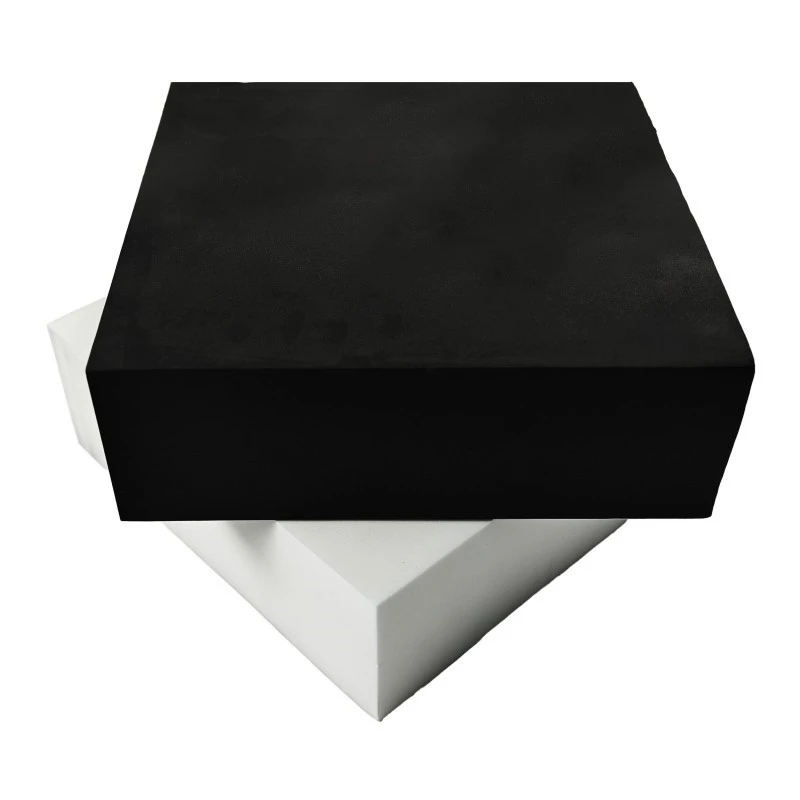
PE Foam
EPE, XPE, and IXPE cross-linked polyethylene foams for flooring underlay, automotive insulation, and shock absorption.

EPDM Foam
High-performance synthetic rubber foam offering superior weather resistance, UV stability, and automotive sealing capabilities.
Partner with an Experienced Supercritical Foam Manufacturer
Contact our engineering team today for technical data sheets, custom prototype development, or container-scale factory quotes across China, Indonesia, and Vietnam.
Direct inquiry: info@firefoxfoam.com | +86-595-88888888
As one of the most experienced supercritical foam suppliers in China, we have world-leading production equipment and strong manufacturing capabilities. Please rest assured to wholesale customized supercritical foam from our factory. For price consultation, contact us.