


 250000㎡ Factory Area 90+ Press Machines & Equipments


PE Foam Manufacturer & Wholesale Supplier
Custom and wholesale PE foam sheet, roll and die-cut part — EPE, XPE and IXPE grades produced in our own plants in China, Indonesia and Vietnam.

Wholesale PE Foam Supplier & Custom Polyethylene Foam Manufacturer
Quanzhou Firefox New Material Co., Ltd. is an integrated manufacturer and trader of professional foam solutions. Established in 1981, we run production bases in China, Indonesia and Vietnam, and are a long-term supplier to major retailers including Walmart, Target, LIDL and Costco. Our polyethylene foam is produced in EPE, XPE and IXPE grades, with density, thickness and compression performance checked against your approved sample and documentation prepared for every shipment.
Rich experience since 1981
Over four decades of foam material expertise, with a team that understands applications, not just materials.
Multi-country production bases
Plants in China, Indonesia and Vietnam reduce single-source and tariff risk in your supply chain.
Documented, batch-tested quality
Density, thickness and compression performance verified against your approved sample, with test documentation prepared for every shipment.
Custom service (OEM / ODM)
Density, colour, thickness and die-cut shape built to your drawing — from sample to mass production.


PE Foam Factory Scale & Production Bases
Three production bases working to one quality standard. Our manufacturing footprint lets us allocate your PE foam order by tariff, lead time and volume — and keeps your supply chain moving if one region is disrupted.
China — Quanzhou, Fujian
Headquarters and largest base. Full process coverage from resin compounding to container loading, plus the in-house laboratory and R&D team.
Indonesia
Production base serving Southeast Asia and export programs, reducing landed cost and supporting tariff diversification.
Vietnam
Additional capacity and an alternative country of origin for US and EU programs, with the same approved specifications.
Inside Our PE Foam Production Lines
From resin compounding to final die-cutting — the equipment behind every PE foam sheet, roll and profile we ship.
Foaming & press lines
90+ press and foaming lines support stable output for trial orders and container-scale programs alike.
Splitting & die-cutting
Blocks and logs are converted into sheets, rolls and finished shapes to your drawing and tolerance.
Lamination & embossing
Multi-density builds, adhesive-backed rolls and embossed surfaces produced on the same line, batch after batch.
In-house laboratory
Density, thickness, compression and resilience testing before every shipment leaves the factory.
What Is PE Foam?
PE foam — polyethylene foam — is a closed-cell thermoplastic foam made from polyethylene resin. Its sealed cell structure keeps water out while holding air in, which is why it cushions, insulates and floats at very low weight.
Polyethylene foam is produced by melting polyethylene resin and expanding it with a blowing agent into a fine, uniform closed-cell structure. Because the cells are sealed rather than interconnected, water and vapour cannot travel through the material, and the foam recovers its thickness after compression far better than open-cell alternatives.
The family covers three main grades: EPE (expanded polyethylene, non-cross-linked), XPE (chemically cross-linked polyethylene) and IXPE (irradiation cross-linked polyethylene). Higher cross-linking gives a finer cell, better surface finish and greater dimensional stability — which is why XPE and IXPE are preferred for flooring underlay, play mats and thermoformed parts.
Who buys this product?
- Packaging and protective-solutions suppliers
- Building, flooring and insulation distributors
- Automotive interior and acoustic part makers
- Sports, play-mat and leisure brands
- Marine, buoyancy and outdoor equipment suppliers
- Retail chains and private-label programs
PE Foam Products & Where They Are Used
We supply polyethylene foam in the forms your application needs — soft sheet, high-density board, thin roll and XPE mat — in the density, thickness and surface your specification calls for.
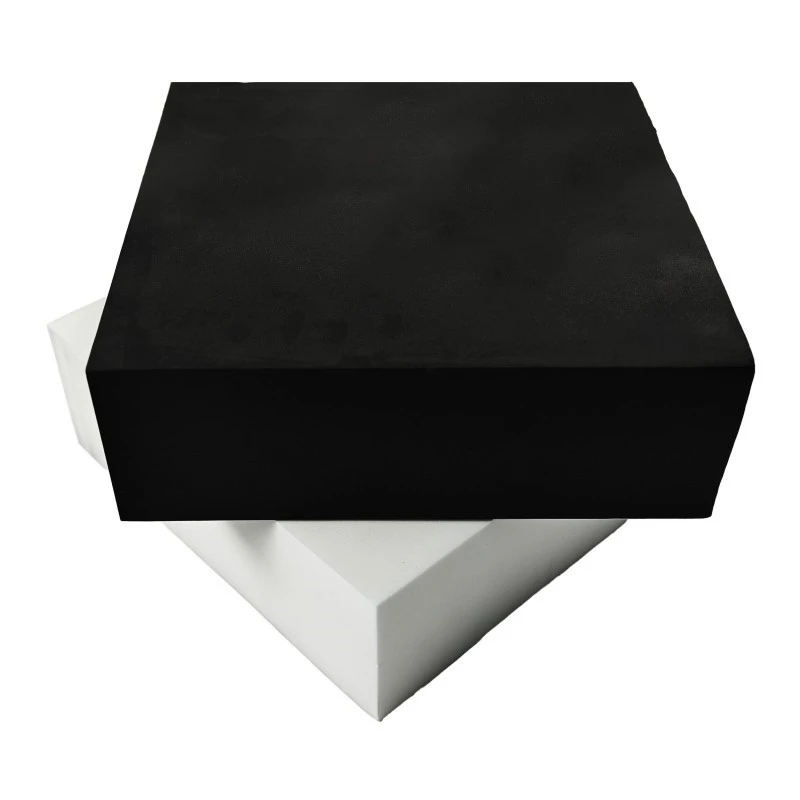
Soft PE Foam
Low-density foam with a soft hand feel and high compressibility, used for protective packaging, inserts and cushioning layers.

High-Density PE Foam
Firmer board that holds its shape under load — specified for structural packaging, dividers, gaskets and load-bearing pads.

Thin PE Foam
Thin-gauge sheet and roll for interleaving, surface protection, lamination and flooring underlay where caliper control matters.

XPE Foam Play Mat
Cross-linked PE mat for play areas, crawling and leisure use — reversible, easy to clean and produced for private-label programs.
Where PE Foam Is Used
Application conditions determine which PE foam grade fits. Compare the load, the environment and the fabrication step before approving a specification.
Packaging & protection
Cushioning inserts, corner pads, interleaving sheet and protective liners for electronics, furniture and fragile goods.
Building & flooring
Acoustic and thermal underlay for laminate and engineered flooring, expansion joint filler and moisture barrier layers.
Automotive & transport
Interior padding, door and roof insulation, acoustic damping, boot liners and seat spacer foam.
Sports, play & leisure
Play mats, crawling mats, yoga and exercise mats, camping pads and gym surface underlay.
Marine & buoyancy
Flotation foam, life-jacket and buoy inserts, boat decking, dock fenders and water-sports padding.
Industrial conversion
Gaskets, seals, insulation sleeves, spacer pads and thermoformed technical parts produced to drawing.
What Are the Advantages of PE Foam?
PE foam is chosen by converters and brand owners for the way it combines cushioning, insulation and water resistance at very low weight and predictable cost.
Lightweight
Low density keeps packed weight and freight cost down while still absorbing impact.
Water & moisture resistant
Sealed closed cells stop water and vapour penetration, so performance holds in damp and outdoor conditions.
Buoyant
Low density and closed cells make PE foam a natural choice for flotation, marine and water-sports applications.
Thermal insulation
Low thermal conductivity reduces heat transfer in underlay, pipe wrap and transport insulation.
Acoustic damping
Dampens impact noise and airborne sound — useful for flooring underlay and automotive interiors.
Chemical resistance
Withstands contact with water, oils, most acids and alkalis, and common cleaning agents.
Shock absorption
Compresses and recovers repeatedly, protecting both the product and the surface beneath it.
Easy to convert
Die-cut, split, laminated, embossed and thermoformed — with density, colour and thickness built to your drawing.
PE Foam Specifications
Use this guidance to prepare a clear polyethylene foam request. Final specifications are agreed against the application, the approved sample and the commercial order.
| Specification | Available options / guidance |
|---|---|
| Material | Polyethylene (PE) resin, closed-cell foam; LDPE- and HDPE-based grades |
| Grade / structure | EPE (expanded), XPE (chemically cross-linked) and IXPE (irradiation cross-linked) |
| Density | Grade dependent, typically 20 – 200 kg/m³; EPE at the lower end, cross-linked and high-density grades higher |
| Thickness | Thin gauge from about 1mm; heavy board and laminated builds on request |
| Thickness tolerance | Agreed against the approved sample for each production run |
| Sheet / roll size | Cut-to-size sheets and continuous rolls; dimensions confirmed per order |
| Format | Roll, plain sheet, laminated board, die-cut part, thermoformed profile or finished mat |
| Surface | Smooth, embossed or laminated (film, foil or fabric faced) |
| Colour | Natural white, black and custom colours, including multi-layer builds |
| Service temperature | Standard grades suitable for approximately −60 °C to +80 °C; confirm for your application |
| Customization | Density, thickness, colour, die-cut shape, adhesive backing, printing and packing |
| Documentation | Density and dimension reports prepared per shipment; test documentation on request |
| MOQ & lead time | Confirmed per specification and quantity — contact us for details |
Values above describe the typical range for closed-cell polyethylene foam. Confirmed technical data is issued with your quotation and against your approved sample.
Types of PE Foam We Supply
Our range is organised by structure and density — EPE, XPE and IXPE, then soft, thin and high-density formats — so you can match the material to the application instead of over-specifying.
EPE foam (expanded PE)
Non-cross-linked polyethylene foam with a resilient, springy structure. The economical choice for packaging cushioning, protective wrap and general conversion work.
XPE foam (chemically cross-linked)
Chemically cross-linked PE foam with a finer, more uniform cell. Better surface finish and dimensional stability — used for flooring underlay, mats and thermoformed parts.
IXPE foam (irradiation cross-linked)
Cross-linked by electron beam for an even finer cell and smoother surface, with strong thickness consistency for laminating and printed applications.
Soft PE foam
Low-density foam with a soft hand feel and high compressibility for protective packaging, inserts and cushioning layers.
High-density PE foam
Firm board with high compressive strength for structural packaging, dividers, gaskets and load-bearing pads.
Thin PE foam & roll formats
Thin-gauge sheet and continuous roll for interleaving, surface protection and lamination, with caliper control held batch to batch.
How to Choose PE Foam
A practical selection sequence for converters, distributors and project buyers.
Define the application
Confirm whether the foam is for packaging, insulation, flooring, automotive, marine or a converted part.
Choose the structure
EPE for economical cushioning, XPE or IXPE where surface, stability or thermoforming matter.
Set density and thickness
Balance cushioning against compression resistance: soft low-density foam for protection, firmer grades under load.
Approve surface and finish
Check colour, embossing, lamination and caliper on a physical sample before committing to production.
Common Buying Mistakes
Resolve these points before sample approval to reduce specification changes, conversion losses and avoidable freight cost.
Buying on the product name alone
"PE foam" covers densities from roughly 20 to 200 kg/m³. Quote from a defined density and thickness, not a family name.
Mixing up EPE, XPE and IXPE
The three structures behave differently under load and heat. Confirm which one the quotation is based on before comparing suppliers.
Ignoring compression set
Soft foam used under a static load can take a permanent set. Check the load path before choosing density.
Specifying open-cell foam for wet areas
Open-cell materials absorb water and support mould. Closed-cell PE foam is the safer choice for damp or outdoor use.
Under-specifying thickness for insulation
Thermal and acoustic performance both depend on thickness as much as density. Model both together.
Overlooking the conversion step
Die-cutting, laminating and thermoforming all constrain the grade you can use. Confirm fabrication before finalising the sheet.
As one of the most experienced pe foam suppliers in China, we have world-leading production equipment and strong manufacturing capabilities. Please rest assured to wholesale customized pe foam from our factory. For price consultation, contact us.
pe foam, PE Foam Thin, Soft PE Foam