



EU PPWR Regulation 2026: What It Means For Foam Packaging & How Firefox Foam Ensures Full Compliance
Aug 29, 2026
Leave a message
EU PPWR for Foam Packaging: What Changed on 12 August 2026 - and How Firefox Foam Keeps You Compliant

On 12 August 2026, Regulation (EU) 2025/40 - the EU Packaging and Packaging Waste Regulation (PPWR) - started to apply across all 27 member states, replacing Directive 94/62/EC, the framework that had governed packaging on the EU market for more than three decades. The PPWR entered into force on 11 February 2025 and now applies directly in every member state: no national transposition is needed, and the same full-lifecycle rules bind every economic operator that places packaging on the EU market.
Because it is a regulation rather than a directive, the PPWR sets mandatory, directly enforceable requirements for every packaging component - including EVA foam, PE foam and other closed-cell foam materials used as cushioning inserts, protective packaging and transport fillers.
For global manufacturers, brands and retailers sourcing foam packaging from Asia, non-compliance can mean customs detention, market-access restrictions and supply-chain disruption. At Firefox Foam, we have completed PPWR-aligned material testing, formulation optimisation and quality-system upgrades so that our foam packaging solutions meet the new requirements - and so that our customers receive the documentation they need to prove it.
1 What Is the EU PPWR?
The PPWR (Regulation (EU) 2025/40) is the EU's most comprehensive packaging law to date. It is designed to cut packaging waste, raise recyclability, restrict hazardous substances and harmonise packaging rules across all 27 member states - instead of the patchwork of national laws that grew out of the old directive. It applies to all packaging, regardless of material, industry or country of origin, covering primary sales packaging, secondary transport packaging and e-commerce shipping packaging.
For foam materials, the regulation explicitly covers:
- Protective foam inserts and die-cut cushioning used in product packaging
- Foam fillers and shock-absorbing components in transport packaging
- Foam components used in packaging assemblies (laminated foam, adhesive-backed foam)
2 Key PPWR Requirements for Foam Packaging Materials
2.1 Heavy metal restrictions - mandatory for all foam packaging
The sum of the concentration levels of four heavy metals - lead (Pb), cadmium (Cd), mercury (Hg) and hexavalent chromium (Cr VI) - must not exceed 100 mg/kg (100 ppm) in any packaging or packaging component. This applies to all foam substrates, adhesives, coatings and colorants used in packaging foam products. In line with the Commission's guidance on separable packaging components, each individually separable foam layer or component must be tested separately - averaging results across different materials is not acceptable.
2.2 PFAS restrictions - for food-contact foam packaging
For foam materials used in food-contact packaging applications, the PPWR sets three cumulative limits:
| PFAS measure | Limit |
|---|---|
| Any single PFAS (targeted analysis, non-polymeric) | ≤ 25 ppb |
| Sum of targeted PFAS (non-polymeric, incl. precursors) | ≤ 250 ppb |
| Total PFAS, including polymeric PFAS | ≤ 50 ppm |
In practice, per the European Commission guidance published on 30 March 2026, compliance is usually demonstrated through a total-fluorine screening step: if total organic fluorine remains below 50 ppm, the material is treated as compliant without further targeted PFAS analysis; if fluorine exceeds 50 ppm, the manufacturer must show how much of that fluorine is PFAS. Our in-house and third-party test programmes follow exactly this stepwise approach.
2.3 Recyclability performance grades
The PPWR grades packaging recyclability by weight under its Annex II methodology: Grade A ≥ 95 %, Grade B ≥ 80 %, Grade C ≥ 70 %. From 1 January 2030, only packaging achieving at least Grade C may be placed on the EU market; from 1 January 2038, Grade C will no longer be acceptable and only Grades A and B will remain eligible.
For foam packaging, the assessment factors include material purity, the ability to separate the foam from other packaging components, and compatibility with EU recycling streams. Note that the implementing rules for design-for-recycling classification are still being rolled out by the Commission - as of September 2026, no category-specific grades have yet been finalised. This is why Firefox Foam documents material composition and supports formal recyclability assessment rather than merely claiming a grade.
2.4 Packaging minimisation & empty space ratio
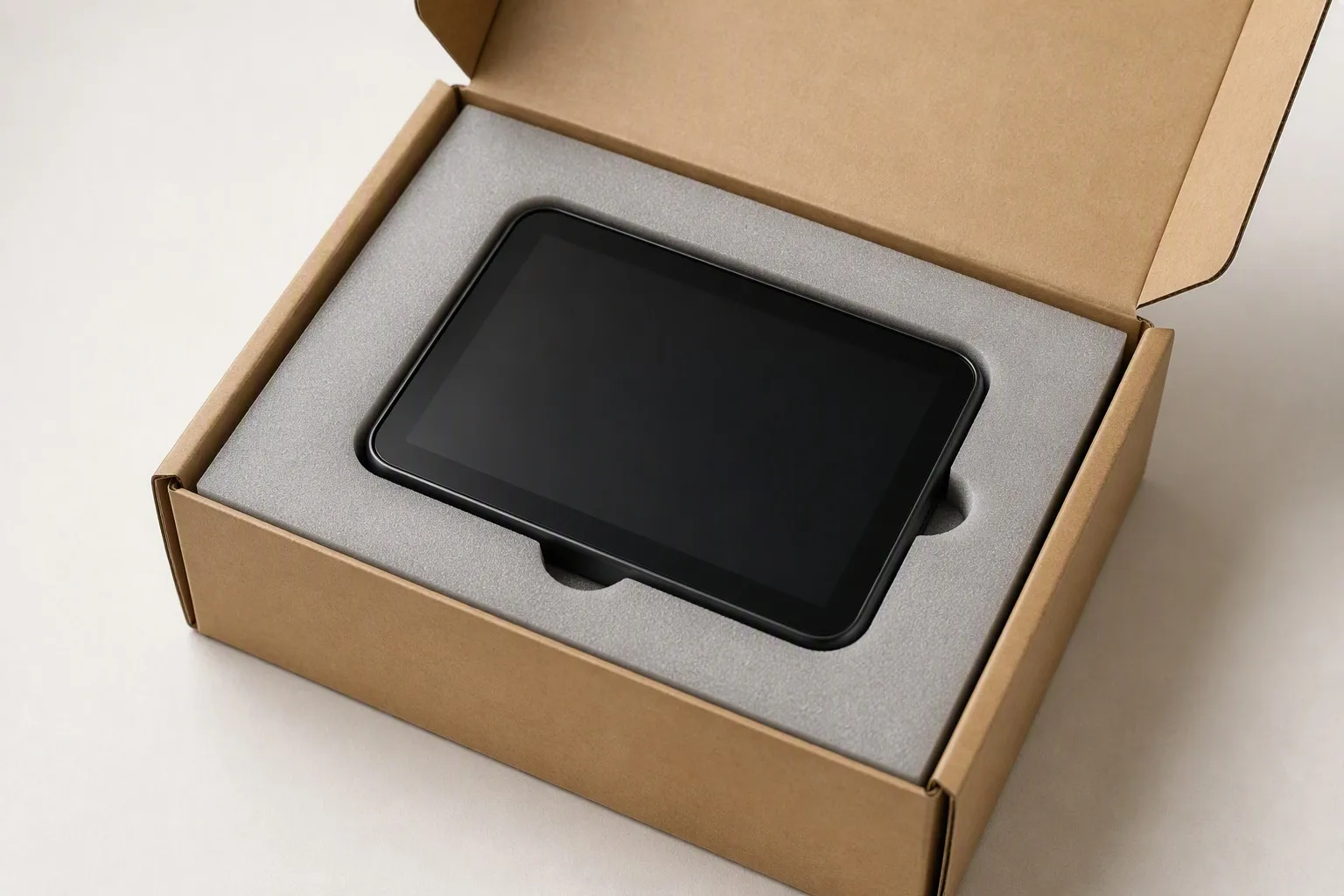
From 1 January 2030, grouped packaging, transport packaging and e-commerce packaging must have an empty-space ratio no greater than 50 %. Crucially, filling and cushioning materials count as void space - foam fillers, air pillows, bubble wrap and paper fill all fall within the calculation. Right-sized, form-fitted foam cushioning is therefore not just a cost lever: it is a direct compliance tool.
3 Why Your Foam Supplier Determines Your PPWR Compliance Success
The PPWR holds every economic operator in the supply chain accountable - manufacturers, importers, brand owners and distributors. If you source foam packaging materials, your supplier's material-control capability directly determines your compliance risk:
- Each separable foam layer or component must be tested separately; mixed-material averaging is not acceptable
- Full technical documentation and test reports must be maintained for every batch
- An EU Declaration of Conformity (DoC) - required under Article 39 of the PPWR and drawn up to the model in Annex VIII - must be issued and held available for market-surveillance authorities on request
Working with a foam manufacturer that has an established chemical-management system is the most reliable way to close compliance gaps and avoid customs delays.
4 Firefox Foam: Fully Capable of Passing PPWR Compliance Testing
With more than 15 years of experience serving EU markets and a long track record of REACH, RoHS and EN71 compliance, Firefox Foam has completed the upgrades needed to make our foam packaging materials PPWR-ready.
1Established chemical control & testing infrastructure
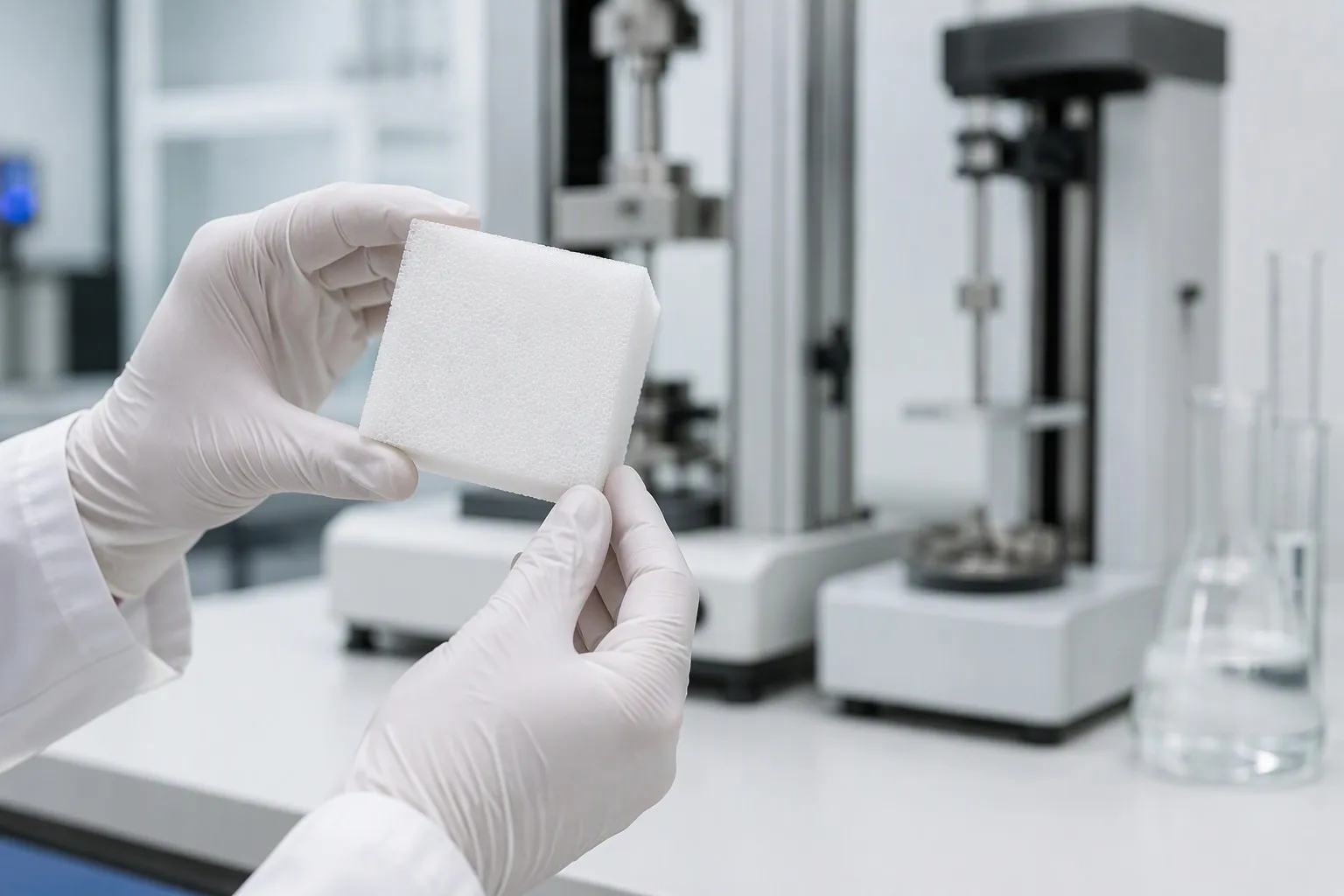
- Dedicated in-house quality lab with full heavy metal testing capability, calibrated to the PPWR test framework
- Batch-by-batch material verification: every production run undergoes incoming raw-material inspection and finished-product testing, keeping heavy metal levels well below the 100 ppm limit
- Third-party lab partnerships with EU-recognised testing institutions for formal PPWR test reports and PFAS verification
2Material formulation optimised for PPWR
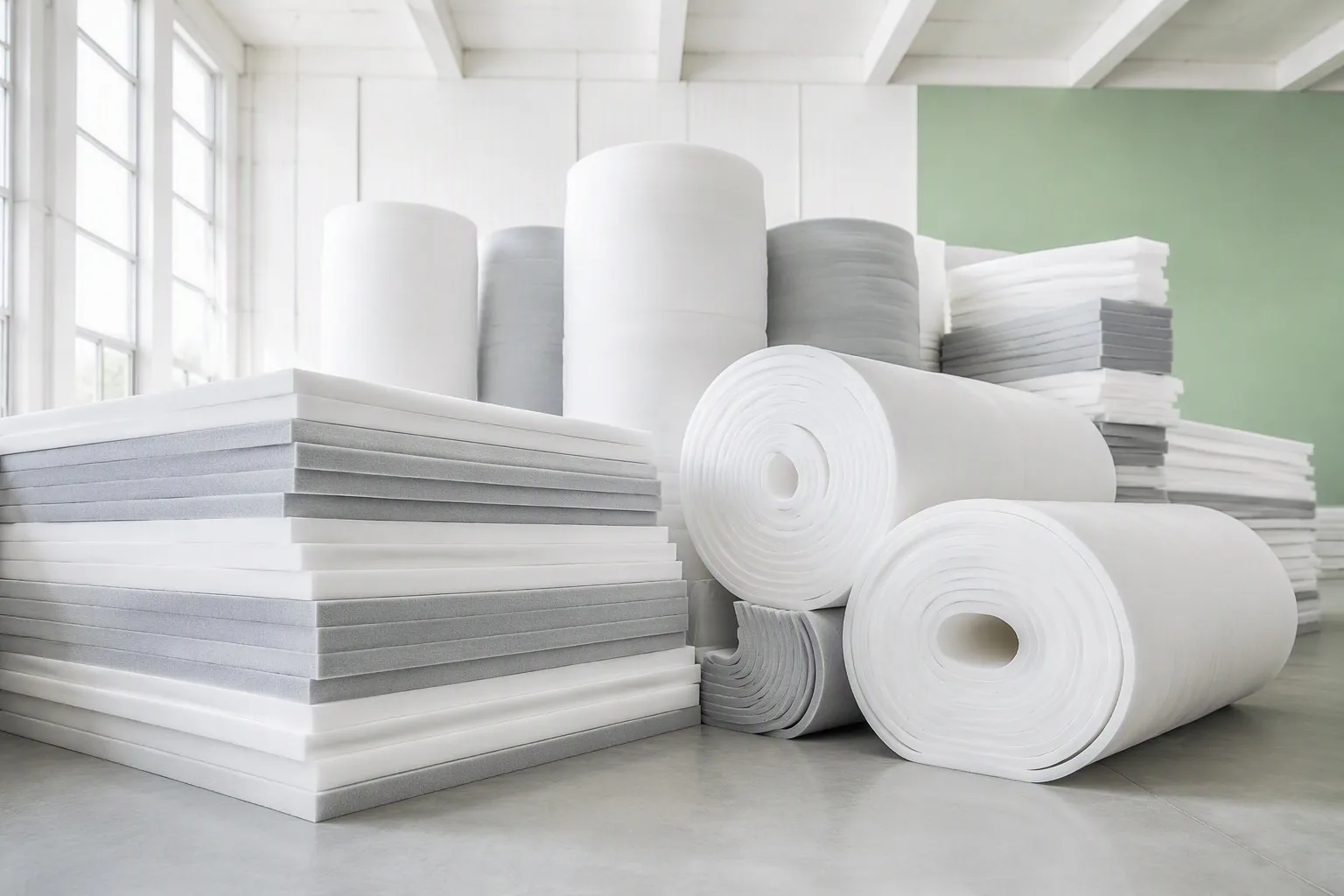
- All standard EVA and PE foam packaging grades are formulated without intentionally added PFAS - fluorinated additives are eliminated from the production process, with compliance verified by total-fluorine screening and targeted PFAS analysis where required
- Pure closed-cell foam formulations without non-recyclable binders or contaminants - a design that supports high recyclability performance under the PPWR Annex II methodology
- Custom formulation support for food-contact foam packaging, meeting all PPWR PFAS thresholds
4.3 Complete compliance documentation support
We provide full PPWR documentation with every shipment, including:
- Valid third-party heavy metal test reports for each material grade
- PFAS test reports for food-contact foam grades
- Material safety data sheets (MSDS) aligned with PPWR requirements
- Technical documentation packages - material specifications, composition data, batch test reports - that support your own EU Declaration of Conformity (DoC), which you or your EU importer issue under Article 39
4.4 Design support for packaging minimisation
Our engineering team helps customers cut unnecessary volume and empty space:
- Right-sized die-cut foam inserts tailored to exact product dimensions
- High-density foam options that deliver equal cushioning with less material volume
- Lightweight foam formulations that reduce overall packaging weight
5 Frequently Asked Questions
Conclusion
The PPWR is the most significant shift in EU packaging compliance in a generation, and foam is a critical component of every manufacturer's compliance strategy. Working with a supplier that understands the regulation, controls material chemistry and provides complete documentation is essential to keeping your products flowing into the EU market.
At Firefox Foam, we have not only invested in testing and formulation upgrades to meet PPWR requirements - we have built compliance into every step of production, from raw-material sourcing to final batch verification. As a long-term trusted supplier to major European and American retailers, we help clients navigate evolving regulation with reliable, fully compliant foam packaging solutions.
Contact the Firefox Foam team today for a free compliance consultation, sample test reports and a detailed quotation.
We support custom die-cut foam inserts, bulk foam rolls and full OEM packaging foam solutions for all industries.